
Spartanburg, Duncan and Greenville, SC
Total Knee Replacement Overview
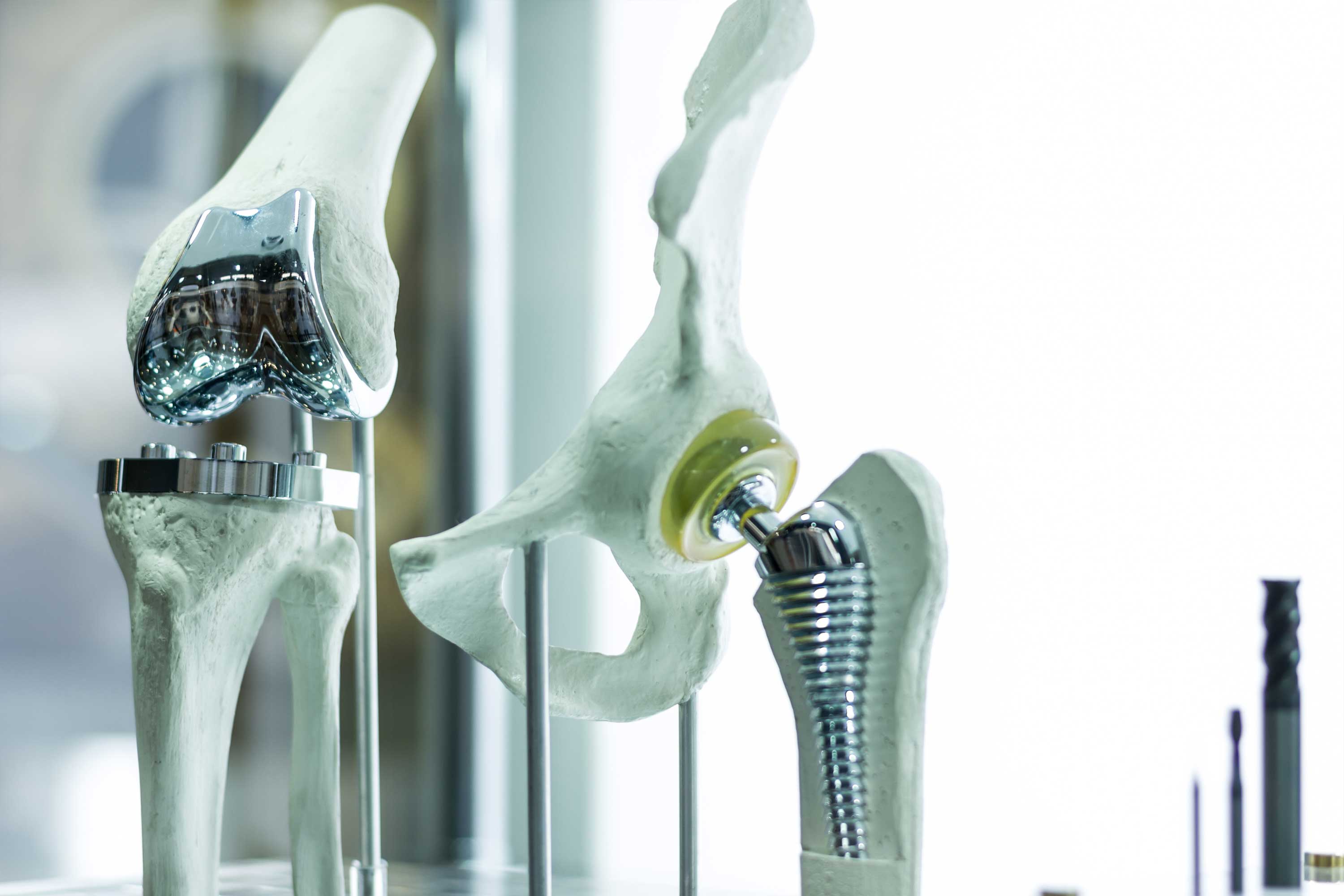
A total knee replacement or total knee arthroplasty is a standard surgical procedure in which arthritic knee bone and cartilage are removed and replaced with metal and plastic components. Carolina Orthopaedics and Neurosurgical Associates (CONA) total knee replacement patients receive new knees and live pain-free lives with minimal to no restrictions.
A surgeon will look at how well your knee moves, how stable it is, and how strong it is to decide if a knee replacement is suitable for you. X-rays help show how bad the damage is.
Your age, weight, level of activity, knee size and shape, and overall health will determine which artificial joints and surgical techniques are best for you.
Anatomy of the Knee
The knee is the largest joint in the body, and to do most everyday things, you need healthy knees.
The lower end of the thighbone (the femur), the top end of the shinbone (the tibia), and the kneecap (patella) make up the knee. Articular cartilage, a smooth substance, covers the ends of these three bones to protect them and make it easy for them to move in the joint.
The menisci are in between the thighbone and the shinbone and are C-shaped wedges that cushion the joint by absorbing shock. Large ligaments connect the femur to the tibia and keep them stable. The knee is strong because of the long muscles in the thighs.
Usually, all of these parts work well together. But illness or injury can upset this balance, causing pain, muscle weakness, and less ability to do things.
How is a Total Knee Replacement Performed?
A total knee replacement is an inpatient procedure performed under local or general anesthesia. The procedure steps are:
1. Begin surgery. Soft tissues are delicately retracted. The surgeon and advanced equipment visualize the knee joint.
2. Preparation. Arthritic bone and cartilage are removed. Bone is prepared for implants.
3. Implants. Implant sizes are trialed until the perfect fit is found. Permanent implants are placed on bones and bonded in place.
Dissolvable sutures close deep and superficial tissue layers. Skin staples close the skin. A sterile dressing is placed over the surgical site and a gauze bandage is wrapped around it. Total procedure time is 1-2 hours.
What conditions can total knee replacement treat?
Total knee replacement treats severe osteoarthritis that does not respond to nonsurgical and minimally invasive treatment options. Depending on the patient, we recommend treating rheumatoid and posttraumatic arthritis.
Is Knee Replacement Right for Me?
Surgical candidates are usually patients in good physical condition and have no injuries or illnesses that could negatively affect results. Because implants generally last about 20-30 years and are not easily replaced, age can play a factor in candidacy. Most candidates are 55 or older.
What are total knee replacement advantages?
Total knee replacement is an effective procedure that benefits many patients. Advantages include:
- A quick 6-8 month recovery
- Immediate pain relief – Knee surgery can help eliminate the crippling knee pain you feel when you walk, run, stand, sit, or lie down. Knee replacement surgery is an excellent way to get rid of the pain
- Dramatically improved quality of life
- Improved mobility – Knee pain is tough to deal with because it makes it hard to walk far. When your knees hurt a lot, you might not be able to walk even short distances at home or work. Even mild knee pain can make it hard for you to care for your family or do an excellent job at work; relieving this pain will allow for more mobility in everyday life
- High success and satisfaction rates – Knee surgery works very well, and patients are thrilled with the results. For example, knee surgery has a success rate between 82% and 95%. More than 95% of knee replacement surgery patients are happy with the results one year after the surgery
- Minimal to no restrictions after recovery
What to Expect After Knee Replacement Surgery
After knee replacement surgery, the chance of blood clots goes up. To avoid this trouble, you will need to:
- Movement as soon as you can – Soon after surgery, we will tell you to sit up and walk with crutches or a walker.
- Apply pressure – You might wear elastic compression stockings or air sleeves on your lower legs during and after surgery. The air sleeves squeeze your legs and then let them go, which keeps blood from getting stuck in the veins of the legs, making it less likely that clots will form.
- Take blood thinners – Your doctor might prescribe blood thinner medication to take by mouth or inject. Depending on how soon you can walk, how active you are, and how likely you are to get blood clots, you might need blood thinners for a few weeks after surgery.
Total Knee Replacement Recovery
Pain is monitored and controlled, and infection risk is minimized during a 3-5 night hospital stay after surgery. Physical therapy is started immediately after surgery and continues throughout the recovery process.
Patients see their CONA specialist for their first follow-up appointment about two weeks after surgery. Skin staples are usually taken out at this time.
Follow-up appointments occur at 6 weeks, 3 months, and 6 months. Again, strength and flexibility are accessed, and x-rays are taken. Complete recovery usually takes about 6-8 months.
Need an appointment?
Fill out our appointment request form or call our office directly at 864-583-CONA. For sudden or urgent injuries and pain, visit our Orthopedic Urgent Care in Greenville and Spartanburg.